
The Real AMG® Meaning Behind High Performance
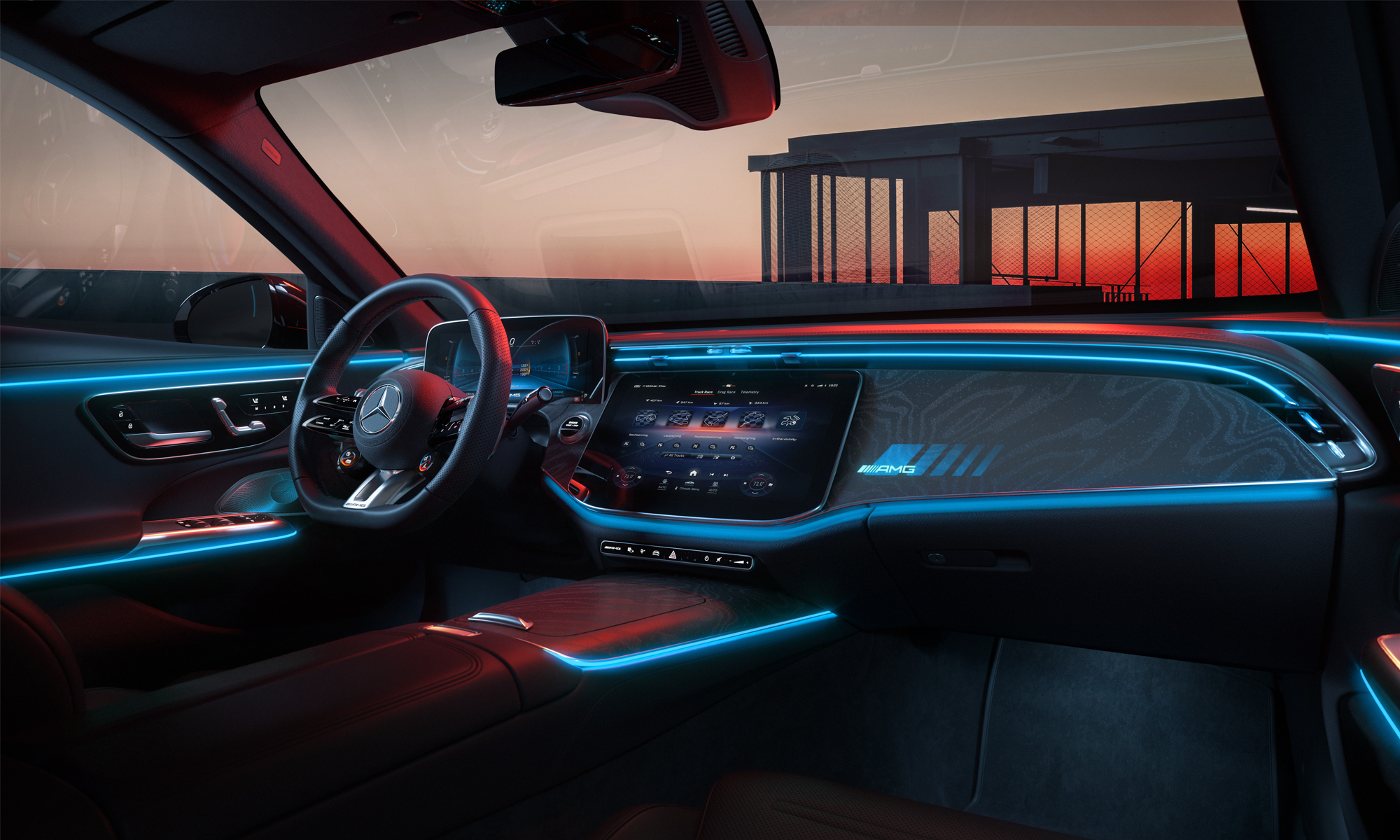
Photo Source/Copyright: Mercedes-Benz USA
The badge on the trunk lid is usually where the question starts. A shopper sees three letters on one Mercedes-Benz and not on another, and the AMG® meaning behind them turns out to have two layers: a literal answer rooted in three names, and a practical one about how the vehicle was engineered. Complicating things slightly, there’s also a styling package that borrows the letters without the engineering.
What Does AMG® Stand For?
AMG® isn’t an abbreviation of a technical term. It’s three proper nouns. The company was established in 1967 as a racing engine manufacturer by two former Mercedes-Benz engineers, Hans Werner Aufrecht and Erhard Melcher, near Stuttgart.
The letters combine their surnames with Großaspach, the town where Aufrecht was born. Operations moved largely to Affalterbach in 1976, and that town remains the division’s home. The acronym, though, is only half of the AMG® meaning.
- Aufrecht: Hans Werner Aufrecht, co-founding engineer
- Melcher: Erhard Melcher, co-founding engineer
- Großaspach: Aufrecht’s birthplace in Germany
Why AMG® Engines Are Built by Hand
Assembly is where the distinction becomes concrete. One technician assembles an AMG® high-performance engine, start to finish, and the builder’s signature is affixed to a plate on the finished unit. The work takes place in Affalterbach alongside the business’s development division.
It’s worth being precise about scope, because this detail is often overstated: hand assembly applies to AMG®’s own engine families, while other AMG® models pair a Mercedes-Benz engine with AMG®-specific tuning, chassis, and drivetrain work. Either way, the badge reflects engineering rather than trim.
True AMG® Models vs. AMG® Line Styling
This is the part of the AMG® meaning that trips up most shoppers. Mercedes-Benz offers an AMG® Line package on many standard models, an appearance and equipment upgrade that includes body styling, a front air dam, AMG®-style wheels, sport seats, a sport steering wheel, sport suspension, and sport brakes.
What doesn’t change is the powertrain. The engine and drivetrain remain the standard Mercedes-Benz units. AMG® develops a true Mercedes-AMG® model throughout, including engine, chassis, and brakes, and the nameplate itself is the tell.
- AMG® Line: appearance and equipment package on a standard Mercedes-Benz model
- Standard powertrain: retains the Mercedes-Benz engine and drivetrain
- Mercedes-AMG® model: AMG®-developed powertrain, chassis, and brake systems
- Badge format: AMG® models typically carry two numerals; standard models carry three
What the Numbers on an AMG® Badge Signal
The two-digit numbers are tier markers, not displacement figures. They trace back to heritage models, such as the 300 SEL 6.3, rather than to what’s under the hood today.
A modern 63-badged AMG® V-8 is nowhere near 6.3 liters, and the same number has been applied to different engines across generations. That’s why decoding a badge by liters tends to go wrong.
| Badge | What It Signals |
|---|---|
| 35 | Entry point to the AMG® lineup, with AMG®-tuned four-cylinder power |
| 45 | Compact-platform AMG® flagship built on AMG®’s own four-cylinder |
| 43 and 53 | Mid-range AMG® tiers, commonly with electrified assistance |
| 63 | Top of the AMG® lineup, built around AMG®’s V-8 engine families |
Where AMG® Performance Is Headed
The lineup is broader than the V-8 reputation suggests. It spans hand-built combustion engines, six-cylinder models with electric assistance, plug-in hybrid performance cars, and electric variants.
An AMG® GT, a C 63 S E Performance, an E 53, and an EQE AMG® have little in common mechanically, yet each carries AMG®-developed chassis, brake, and drivetrain work. That shared engineering, not any one engine layout, is what the badge marks.
Frequently Asked Questions
Q: What does AMG® stand for on a Mercedes-Benz?
A: AMG® stands for Aufrecht, Melcher, and Großaspach, the surnames of founding engineers Hans Werner Aufrecht and Erhard Melcher, plus Aufrecht’s birthplace. The AMG® meaning extends beyond the name to Mercedes-Benz’s high-performance division, founded in 1967.
Q: Is AMG® Line the same as a Mercedes-AMG® model?
A: No. AMG® Line is an appearance and equipment package offered on standard Mercedes-Benz models, and it keeps the standard engine and drivetrain. A Mercedes-AMG® model is engineered by AMG® and badged Mercedes-AMG® rather than Mercedes-Benz.
Q: Are all Mercedes-AMG® engines built by hand?
A: Not all of them. Hand assembly applies to AMG®’s own engine families, where a single technician builds the engine and signs the plate. Other AMG® models pair a Mercedes-Benz engine with AMG®-specific tuning, chassis, and drivetrain work.
Explore AMG® Models
If you’re weighing a true AMG® model against an AMG® Line package, the difference is easier to feel than to read about. Our team can walk you through both. Browse our current lineup or stop by for a closer look.
More From Mercedes-Benz of Washington
Why the Mercedes-Benz SUV Biggest Model Rules
Photo Source/Copyright: Mercedes-Benz USA Six SUVs wear the three-pointed star, but shoppers almost always land on the same practical question: which one actually gives everyone room to stretch out? Sort the lineup from biggest to smallest, and the GLS sits alone at the top, measuring 205.0 inches end-to-end with a 123.4-inch wheelbase. That…
How Much Is the Mercedes-Benz G-Wagon Worth?
Photo Source/Copyright: Mercedes-Benz USA Three versions, one iconic silhouette that hasn’t moved an inch since 1979, and a price spread wide enough that simply saying “I drive a Mercedes-Benz G-Wagon” doesn’t tell the whole story. How much you’ll actually spend depends on what’s sitting under the hood or floorboards, with roughly $45,000 separating the…
How Big Is The Big SUV Mercedes-Benz?
Photo Source/Copyright: [INSERT] If you’re hunting for a full-size family hauler wearing a three-pointed star, the Mercedes-Benz GLS is where the search usually ends. Excluding the commercial Sprinter van, the GLS reigns supreme as the longest, tallest, and roomiest passenger vehicle in the entire Mercedes-Benz lineup. While the iconic G-Class grabs magazine covers…