
What Credit Score Do Car Buyers Need?
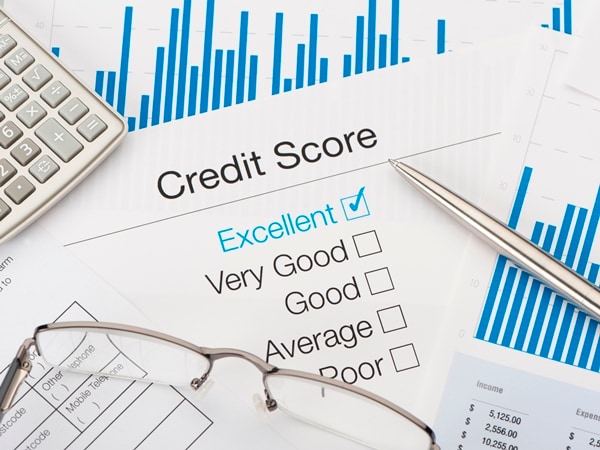
Photo Source/Copyright: Kelley Blue Book
Most folks head to the dealership with a general guess about their credit score and zero clue what the finance manager is actually going to do with it. The number counts, sure. However, it doesn’t work like a simple pass/fail test, despite what most generic financial advice claims.
There isn’t a single magical threshold. FICO explicitly points this out: “good” is entirely in the eye of the lender. One bank reserves top-tier pricing for buyers above 730, while another won’t unlock their best APR until you hit 760.
Where Lenders Actually Draw the Line
Standard FICO scores range from 300 to 850, broken down into five general brackets:
- Poor: 300 to 579
- Fair: 580 to 669
- Good: 670 to 739
- Very Good: 740 to 799
- Exceptional: 800 to 850
Here’s the catch almost everyone misses: auto lenders frequently pull a specialized FICO Auto Score, which runs on a completely different scale from 250 to 900. If the number on your banking app doesn’t match the readout on the finance desk, don’t panic; neither one is incorrect.
For context, the typical new-car buyer lands somewhere in the low-to-mid 700s. That isn’t a strict requirement to get approved; it’s simply where the middle of the pack happens to sit.
Why the Score Is Only Half the Equation
Income doesn’t factor into your FICO score at all. Zero. Your paycheck never shows up on a credit report. Lenders evaluate your earnings separately, so two applicants with identical credit scores can walk away with completely different loan terms.
Aside from your score, underwriters look closely at:
- Income and job stability: Verifying your paycheck comfortably fits the monthly payment.
- Debt-to-income (DTI) ratio: How much of your monthly income is already spoken for.
- Loan-to-value (LTV) ratio: The total amount financed measured against what the vehicle is actually worth.
- Trade-in equity: Value carried over from your current car that directly shrinks the amount financed.
A modest score attached to a stable, low-debt file often looks far less risky to a lender than a strong score attached to a thin, tight budget.
Moving the Needle Before You Apply
Two core components make up roughly two-thirds of your FICO score: payment history (35 percent) and credit utilization (30 percent). Pay your bills on time and knock down balances to move the parts that genuinely count.
Pull your full credit reports weeks before visiting a lot. Errors happen more often than you’d think, and disputing them costs nothing.
Also, don’t fear rate shopping. FICO ignores auto loan inquiries from the 30 days before scoring and treats multiple auto inquiries inside a standard window (up to 45 days) as a single hit. The system explicitly separates shopping for one car loan from opening five new credit cards.
Options If Your Score Isn’t There Yet
Cars get financed below the “good” band constantly. Used-vehicle buyers average lower scores than new-vehicle buyers, and lenders design specific programs around that reality.
When scores are lower, interest rates climb, and loan terms tighten. Lenders lean harder on non-score factors like income, job tenure, and vehicle value.
You can balance out a lower score by bringing a co-signer with stronger credit, trading in a vehicle carrying real equity, or simply financing less by choosing a cheaper car.
Talk Numbers Before You Talk Cars
Our finance team works with buyers across the entire credit spectrum and can explain what your particular numbers mean before you commit. Get pre-qualified first, so you walk in knowing your real terms, then browse inventory that fits the payment you actually want.
More From Mercedes-Benz of Washington
The Real AMG® Meaning Behind High Performance
Photo Source/Copyright: Mercedes-Benz USA The badge on the trunk lid is usually where the question starts. A shopper sees three letters on one Mercedes-Benz and not on another, and the AMG® meaning behind them turns out to have two layers: a literal answer rooted in three names, and a practical one about how…
What Does AMG® Mean For Mercedes-Benz Models?
Photo Source/Copyright: Mercedes-Benz USA If you’ve ever spotted the letters AMG® on the back of a Mercedes-Benz and wondered what they mean, you’re looking at one of the most respected names in performance driving. AMG® stands for Aufrecht, Melcher, and Großaspach, and it represents the high-performance division of Mercedes-Benz. These are the models engineered…
Feel Safer With the Mercedes-Benz Driver Assistance Package
Photo Source/Copyright: Mercedes-Benz USA How does Mercedes-Benz heighten your daily peace of mind behind the wheel? The Mercedes-Benz Driver Assistance Package brings together an integrated suite of safety and convenience technologies that watch the road alongside you. Using a network of cameras, radar, and ultrasonic sensors, it helps manage speed, following distance, steering, and…